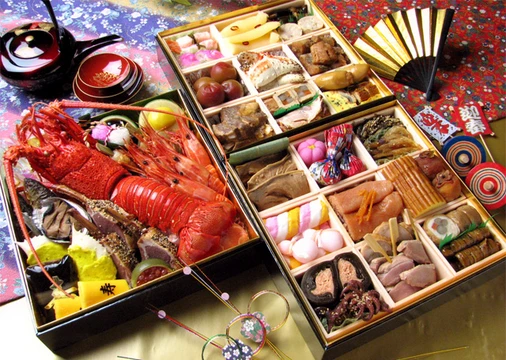
Japanese regional cuisine
Local dishes from Japan's regions, rooted in tradition and ingredients.

Wikipedia / Wikimedia Commons
Japanese regional cuisine, known as kyōdo ryōri, encompasses a vast array of local dishes that originated from traditional recipes and local ingredients. These specialties reflect Japan's diverse geography and history, with many still surviving today while new ones continue to be created.
- field
- Culinary tradition
- nationality
- Japanese
- known_for
- Regional dishes using local ingredients and traditional recipes
- origins
- Traditional, late 19th/early 20th century, post-WWII, modern
Lore & Background
Japanese regional cuisine has historical origins that can be categorized into four types: traditional dishes from before refrigeration, those influenced by foreign culture after the 1886 Meiji Restoration, dishes created from food shortages after the Second World War, and modern inventions by chefs or promoted by businesses and tourist boards. Many regional specialties survive to this day, with some new ones still being created.
Regionality is also apparent in dishes served throughout Japan, such as ozōni soup and udon noodles. For example, the dashi-based broth for udon noodles is heavy on dark soy sauce in eastern Japan, while in western Japan it relies more on complex dashi-flavoring with a hint of light soy sauce. Some originally regional dishes like okonomiyaki and Edo-style sushi have spread nationwide and are no longer considered regional.
Reader's Guide
Japanese regional cuisine, or kyōdo ryōri, holds significance as a reflection of local history, geography, and culture. The dishes range from Hokkaido's Jingisukan (barbecued lamb and vegetables) and Ishikari-nabe (salmon stewed in miso broth) to Tōhoku's kiritanpo (pounded rice cakes) and gyūtan (beef tongue). The Chūbu and Kanto regions offer specialties like monja-yaki (a runny savory pancake) and miso nikomi udon (udon stewed in hatcho-miso broth). Kansai and Chūgoku feature yudofu (tofu simmered in hot water) and okonomiyaki (savory pancakes), while Shikoku is known for Sanuki udon and katsuo no tataki (seared skipjack tuna). Kyūshū boasts Hakata ramen (tonkotsu broth) and champon (noodles with seafood and vegetables). These dishes often originated from local ingredients and historical circumstances, such as food shortages after the Second World War or the influx of foreign culture after the Meiji Restoration. Many have become iconic, with some like takoyaki and castella now popular throughout Japan.
Did You Know?
- Some regional dishes like okonomiyaki and Edo-style sushi have spread throughout Japan and are no longer considered regional.
- The broth for udon noodles differs between eastern Japan (dark soy sauce) and western Japan (complex dashi with light soy sauce).
- New regional specialties are still being created, including those invented by modern chefs or promoted by local businesses and tourist boards.
- Hakata ramen uses a tonkotsu (pork bone stock) soup and is served with a kaedama system for adding extra noodles.
Frequently Asked Questions
What is Japanese regional cuisine (kyōdo ryōri)?
It is the broad umbrella term for local dishes that grew out of specific areas' traditional recipes and locally sourced ingredients. Each region developed its own specialties based on what its geography and history made available.
How is Japanese regional cuisine different from kaiseki or other formal Japanese cooking styles?
Rather than following a single codified aesthetic, it covers hundreds of distinct local preparations tied to particular prefectures or communities. The focus is on what a specific area traditionally made with what it had on hand, not on a unified philosophical framework.
When did Japanese regional cuisine become a recognized culinary category?
The individual dishes often trace back centuries, but the idea of cataloging them as a distinct tradition solidified in the late 19th and early 20th centuries. Post-WWII food culture and modern trends have kept adding new regional specialties to the mix.
What kinds of ingredients are central to Japanese regional cuisine?
Locally harvested produce, coastal seafood, and area-specific preserved or fermented goods form the backbone of these dishes. A fishing village's preparations will look very different from a mountain community's reliance on foraged vegetables and cured meats.
Why does Japanese regional cuisine matter to Japanese food culture?
It keeps centuries of localized cooking knowledge alive against the pull of national homogenization. It also gives each community a distinct culinary identity that mirrors its unique climate, terrain, and historical trade patterns.
More in Japanese cuisine 1-24
Spotted an error? Know more?
This is a living reference — every entry is fact-audited, and reader corrections feed straight into our audit queue. Suggest an edit · See this site's audit record