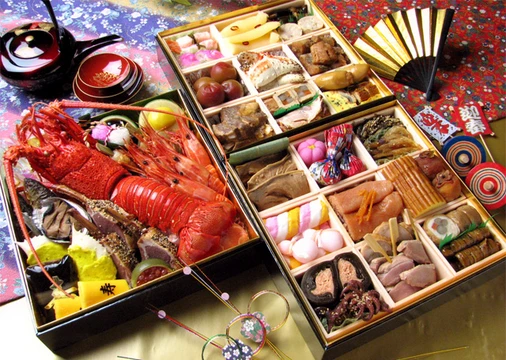
Customs and etiquette in Japanese dining
Traditional rules for behavior and response in Japanese dining.
In Japan, dining customs reflect a deep sense of gratitude and respect. Before a meal, it is traditional to say *itadakimasu*—meaning "I humbly receive"—as a way of thanking everyone involved in providing the food, from farmers to the animals that gave their lives. This practice can be seen as both secular and religious. When saying it, one typically places both hands together in front of the chest or on the lap. The visual presentation of food is considered as important as its taste, and it is polite to compliment the chef before eating. Diners should wait for the eldest or highest-ranking guest to begin before starting their own meal. After finishing, saying *gochisōsama-deshita* ("it was a feast") to the host or restaurant staff is customary.
Leaving food uneaten is not rude; it signals that the host should offer another serving. Finishing everything, especially rice, indicates satisfaction and that no more is needed. Children are encouraged to eat every grain of rice. Picking out specific ingredients and leaving the rest is impolite, and one should chew with the mouth closed. It is acceptable to lift soup and rice bowls to the mouth to avoid spilling. Miso soup is drunk directly from its small bowl; larger soups or those with chunky ingredients may come with a spoon. Chopsticks (*hashi*) are always provided. Noodles from hot soup may be blown on to cool them, and slurping is appropriate for ramen or soba, though not for Western-style pasta.
Rice is usually eaten plain or with nori, furikake, or more substantial additions like a raw egg, nattō, fish, or tsukemono. The egg and nattō are often mixed into the rice, especially at breakfast. Some dishes have ingredients cooked into the rice (*takikomi gohan*) or mixed in afterward (*maze gohan*). Pouring soy sauce over white rice is not customary, nor is it proper to pour it directly over sashimi or sushi. Soy sauce should be used sparingly to enhance flavor, not overwhelm it. A small dish is provided for dipping; pouring too much is considered greedy and wasteful. When eating nigiri-zushi, dip the topping side into the soy sauce to keep the rice from soaking up too much. Leaving stray rice grains in the sauce is uncouth, as is mixing wasabi into the soy sauce dish; instead, place a dab of wasabi on the sushi after dipping. In sushi-only restaurants, it is fine to eat nigiri-zushi with fingers.
Eating or dr
- field
- Cultural etiquette
- nationality
- Japanese
- known_for
- Structured dining customs including itadakimasu, chopstick etiquette, and seating hierarchy
Lore & Background
Japanese dining etiquette includes saying itadakimasu before a meal as an expression of gratitude to farmers and living organisms. It is polite to compliment the chef before touching food and to wait for the eldest or highest ranking guest to start eating. After the meal, saying gochisōsama-deshita to the host and restaurant staff is customary. Not finishing one's meal signals a wish for another serving, while finishing completely indicates satisfaction. It is impolite to pick out certain ingredients and leave the rest, and one should chew with the mouth closed.
Reader's Guide
Japanese dining etiquette is significant as it codifies social harmony and respect in communal eating. Customs such as not sticking chopsticks vertically into rice (resembling funeral incense) and using the top ends of chopsticks to take food from shared dishes prevent offense. The practice of saying itadakimasu and gochisōsama-deshita fosters gratitude. The etiquette also addresses public eating, where eating while walking may be seen as inconsiderate. These traditions preserve cultural identity and guide both locals and visitors in proper behavior, with an emphasis on observing others and asking questions being appreciated.
Did You Know?
- Saying itadakimasu before a meal has been described as both a secular and a religious practice.
- It is impolite to leave chopsticks sticking vertically into rice, as this resembles incense sticks used in offerings to the dead.
- Pouring soy sauce directly over white rice is not a Japanese custom.
- In sushi-only restaurants, it is perfectly acceptable to use fingers instead of chopsticks to eat nigiri-zushi.
More in Japanese cuisine 1-24
Spotted an error? Know more?
This is a living reference — every entry is fact-audited, and reader corrections feed straight into our audit queue. Suggest an edit · See this site's audit record