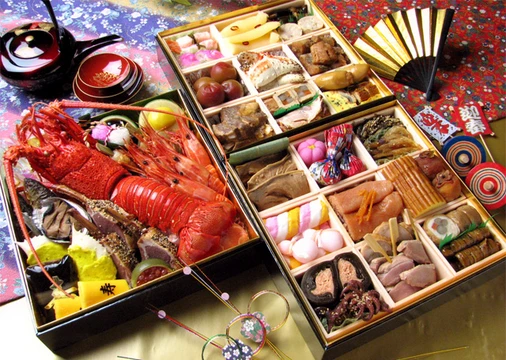
History of Japanese cuisine
Japanese cuisine evolved from rice and seafood to refined court dishes.
The history of Japanese cuisine traces the development of food and cooking practices in Japan from the early Neolithic settlements through the modern Edo period. Rice and seafood have been paramount since ancient times, with rice cultivation introduced from China around the third century BCE. The cuisine was shaped by Chinese cultural influence via Korea, the adoption of Buddhism, and later a move toward individuality after the decline of the Tang dynasty.
- earliest_period
- Jōmon period (14,000–300 BCE)
- key_introduction
- Rice cultivation from China (c. 3rd century BCE)
- major_influence
- Chinese culture via Korea (Kofun period, 300–538 CE)
- meat_taboo_origin
- Emperor Tenmu's decree in 675 CE
- chopstick_introduction
- Heian period (794–1185) via Korea
- tea_introduction
- Brought by monks Saicho and Kukai in 805 CE
- notable_shift
- Move toward individuality in cuisine after 9th century Tang decline
Lore & Background
During the Kofun period, Chinese culture entered Japan from Korea, and Buddhism's rise under the Soga clan led to a taboo on eating meat, especially mammals. Emperor Tenmu's 675 CE decree prohibited consumption of cattle, horses, dogs, monkeys, and chickens during certain months, though deer and wild boar remained important. The Heian period saw further bans on killing animals, and chopsticks were introduced from China via Korea, initially used only by nobility at banquets. Tea, first recorded in the Nara period, became popular after Buddhist monks brought seeds and leaves in 805 CE.
Reader's Guide
The history of Japanese cuisine reflects a long evolution from Neolithic reliance on rice and seafood to a sophisticated culinary tradition shaped by foreign influence and internal political shifts. The introduction of rice cultivation, Buddhism's meat taboos, and Chinese cultural imports like chopsticks and tea were foundational. The Heian period marked a peak of refinement among nobility, with elaborate banquets and diverse dishes. The Kamakura period saw a return to simplicity under samurai rule, rejecting ostentation. These developments laid the groundwork for the rich records of commoner cuisine in the Edo period, when literacy and wood-block printed literature flourished. Understanding this history reveals how Japanese cuisine balanced external influences with indigenous practices, creating a distinct culinary identity that persisted until modern times.
Did You Know?
- Rice was commonly boiled plain and called gohan or meshi, terms that became synonyms for 'meal'.
- Emperor Tenmu's 675 CE decree banned eating cattle, horses, dogs, monkeys, and chickens during the 4th–9th months, with a death sentence for violators.
- Chopsticks were introduced to Japan from China via Korea during the Heian period, but were initially used only by nobility at banquets.
- Tea was first recorded in Japan during the Nara period (710–784) but grew popular after monks Saicho and Kukai brought seeds and leaves in 805 CE.
More in Japanese cuisine 1-24
Spotted an error? Know more?
This is a living reference — every entry is fact-audited, and reader corrections feed straight into our audit queue. Suggest an edit · See this site's audit record